Eating Less on a GLP-1: How to Avoid Nutrient Gaps
The nutrients that go missing first when you eat less, and the food-first ways to cover them.
By PhenAprin Research Team
Reviewed against published researchPublished · Last updated October 26, 2026
On this page
Quick answer
Key takeaways
- Small eating windows make nutrient gaps a math problem: fewer calories means fewer chances to hit your vitamin, mineral, protein, and fiber needs.
- Even professionally designed diet plans, analyzed at their recommended calorie levels, averaged only about 44 percent micronutrient sufficiency, leaving roughly 15 of 27 essential micronutrients short.
- A 2025 joint advisory from four major medical and nutrition organizations lists preventing micronutrient deficiencies, adequate protein with strength training, and nutrient-dense diets among its core priorities during GLP-1 therapy.
- Food first: nutrient-dense choices do more per bite. A basic multivitamin can be reasonable insurance when intake is low, and that call belongs with your provider or dietitian.
- PhenAprin XR is a fiber-based appetite support formula, not a multivitamin.
Why do nutrient gaps happen when you eat less?
Because nutrition rides on calories. Cut the calories in half and, unless the quality of every bite goes up, the vitamins, minerals, protein, and fiber drop with them.
The scale of the problem surprises people. An analysis of four popular, professionally designed diet plans found that, followed exactly at their recommended calorie levels, they delivered on average only about 44 percent sufficiency across 27 essential micronutrients, leaving a typical follower short on roughly 15 of the 27 (Calton, 2010). Those were curated plans built by experts. An appetite reduced by medication, choosing meals ad hoc, has no curator at all.
That is the honest frame for a GLP-1 journey: the medication conversation belongs with your prescriber, but the nutrition-density conversation belongs in your kitchen, every day of treatment.
What do the clinical guidelines actually recommend?
In 2025, the American College of Lifestyle Medicine, the American Society for Nutrition, the Obesity Medicine Association, and The Obesity Society issued a joint advisory on nutrition during GLP-1 therapy for obesity. Its priorities read like a checklist for exactly this problem (PMID 40673264):
- Nutritional readiness before and during therapy, with personalized, nutrient-dense, minimally processed eating patterns.
- Prevention of micronutrient deficiencies while intake is low.
- Adequate protein intake plus strength training to preserve lean mass.
- Management of gastrointestinal side effects through diet quality, in partnership with the care team.
A companion theme across clinical guidance on anti-obesity medications is the same (Almandoz, 2024): what you eat while eating less determines how healthy the weight loss is, not just how large.
For the protein half of that guidance, our companion article on protein and muscle on a GLP-1 journey covers targets and food strategy in depth.
Do you need a multivitamin on a GLP-1 program?
The honest answer: maybe, and it is a provider conversation, not a marketing one.
Food comes first, because whole foods carry protein, fiber, and micronutrients together. But when total intake is genuinely small, a basic once-daily multivitamin can be reasonable insurance against the gap math described above. Whether you need one, and which one, depends on your intake, your labs, and your health history, which is why the right person to ask is your prescriber or a registered dietitian.
We will say the quiet part plainly: PhenAprin does not sell a multivitamin, and PhenAprin XR is not one. It is a caffeine-free, fiber-based appetite support formula. If a multivitamin is what your situation calls for, buy a reputable third-party-tested one.
How do you get enough fiber when portions are small?
Fiber has the same math problem as vitamins: it usually arrives in volume (vegetables, beans, whole grains), and volume is exactly what a reduced appetite cannot handle.
Three practical moves:
Choose fiber-dense over fiber-diluted. Beans, lentils, berries, oats, chia, and vegetables deliver the most fiber per bite. When your total bites are limited, density decides everything.
Spread fiber across the day. Small amounts at each meal sit more comfortably than one large load, especially while your digestion is adjusting to eating less.
Use a gel fiber deliberately. A concentrated soluble fiber can supplement what small portions cannot carry. Glucomannan, the konjac-root fiber in PhenAprin XR, absorbs water and expands in the stomach, supporting the physical side of fullness between meals: 800 mg per 2-capsule serving, taken with at least 8 oz of water per capsule, 30 to 60 minutes before a meal, never right before bed, and never with any difficulty swallowing. It is a supplement, not a medication, and not a substitute for any prescription treatment; if you take medication, keep fiber separated in timing and confirm with your provider. Our glucomannan guide covers the mechanism and the safety rules in full.
To be clear about the math: 800 to 1,600 mg of glucomannan will not carry your daily fiber totals, and it is not meant to. Food does that job; XR's job is the fullness side between meals.
Why does hydration matter when you eat less?
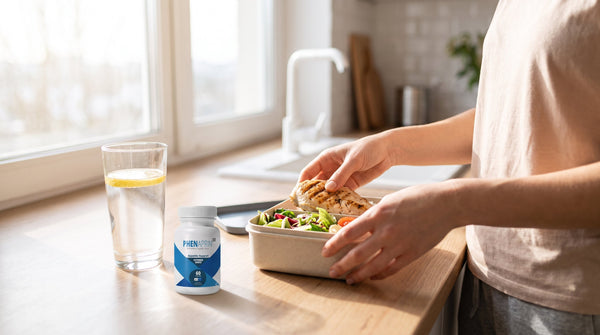
Eating less quietly cuts fluid intake too, because a surprising share of daily water arrives inside food. Add the fluid that gel fibers require, and hydration stops being a background detail: keep water visible and scheduled rather than waiting on thirst, and front-load it earlier in the day so it does not crowd your small meals at dinner.
How do you find your own nutrient gaps?
Before adding anything, measure. Track your actual intake honestly for one week (an app is fine): total calories, protein grams, fiber grams, and how many meals contained a fruit or vegetable. Bring the numbers to your provider or dietitian and let them point at the real gaps. Ten minutes a day of tracking beats a shelf of guessed-at supplements, and it turns the advisory's priorities into your personal checklist.
For the appetite side of the journey, start with appetite support on a GLP-1 journey and the hub page on GLP-1 companion support.
These statements have not been evaluated by the Food and Drug Administration. This product is not intended to diagnose, treat, cure, or prevent any disease. Individual results vary.
Frequently asked questions
Which nutrients commonly run low when you eat very little?
Start with the four the Dietary Guidelines for Americans already flag as underconsumed dietary components of public health concern: calcium, potassium, dietary fiber, and vitamin D. Eating less widens that gap: an analysis of four expert-designed diet plans found average sufficiency of only about 44 percent across 27 essential micronutrients at recommended calorie levels (Calton, 2010). Protein runs low for the same volume reasons. Your own labs and a dietitian beat any generic list.
Should I take my supplements at the same time as my medication?
Ask your prescriber, and as a general rule keep gel fibers like glucomannan separated in timing from medications, since a fiber gel can slow how other things absorb. Every supplement in your routine belongs on the list your provider sees.
Do I need a multivitamin while on a GLP-1 program?
Possibly. A 2025 joint advisory from four major medical and nutrition organizations names preventing micronutrient deficiencies as a priority during GLP-1 therapy (PMID 40673264), and a basic multivitamin is one common tool for that when intake is low. It is a provider or dietitian decision based on your intake and labs, not a default.
Can PhenAprin XR replace a multivitamin?
No. XR is a caffeine-free, fiber-based appetite support formula built around glucomannan; it is not a multivitamin and does not provide your vitamins and minerals. It can support fullness between meals, taken with at least 8 oz of water per capsule, never right before bed, and not for anyone with difficulty swallowing.
What are the most nutrient-dense foods for a small appetite?
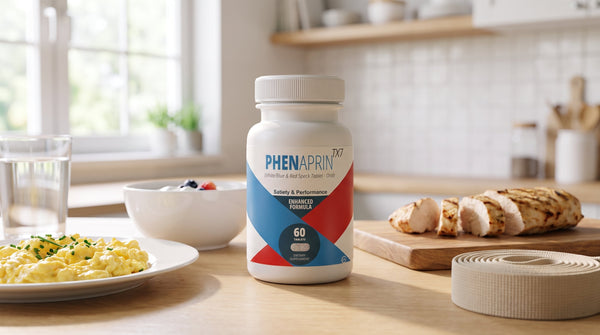
Eggs, Greek yogurt, fish, tofu, beans and lentils, berries, oats, chia, nuts in small amounts, and colorful vegetables. They carry protein, fiber, and micronutrients in few bites, which is exactly the trade a reduced appetite needs.
References
- PMID 40673264. Mozaffarian D, et al. Nutritional priorities to support GLP-1 therapy for obesity: a joint Advisory from ACLM, ASN, OMA, and The Obesity Society. 2025. [link]
- Calton 2010. Calton JB. Prevalence of micronutrient deficiency in popular diet plans. Journal of the International Society of Sports Nutrition, 2010. [link]
- Almandoz 2024. Almandoz JP, et al. Nutritional considerations with antiobesity medications. Obesity, 2024. [link]
- Dietary Guidelines 2020-2025. U.S. Departments of Agriculture and of Health and Human Services. Dietary Guidelines for Americans: food sources of select nutrients (components of public health concern). [link]

From PhenAprin
PhenAprinXR Diet Pills
Transparent label, honest dosing, third-party tested.
See the formulaFind your fit
Find the PhenAprin formula that fits your routine
Three formulas, one transparent label. Compare them and choose the one built for your day.