Food Noise at Night: Why It Gets Louder After Dark
Why evening turns the food chatter up, and the routine that turns it back down.
By PhenAprin Research Team
Reviewed against published researchPublished · Last updated October 19, 2026
On this page
Quick answer
Key takeaways
- Evening food noise is common biology, not weak character. Research shows the internal circadian clock independently increases hunger and appetite in the evening.
- Under-eating all day is the classic setup. A day of skipped meals hands the evening to your hunger hormones.
- Short sleep makes tomorrow louder: in one controlled study, two nights of restricted sleep dropped the fullness hormone leptin by 18 percent, raised the hunger hormone ghrelin by 28 percent, and raised reported hunger by 24 percent.
- The playbook: front-load daytime protein and fiber, plan the evening snack instead of grazing, close the kitchen with a ritual, and manage nighttime food cues.
- A caffeine-free supplement can support fullness through the evening, taken with water before the evening meal, never at bedtime. Supplements support satiety signaling; they do not switch thoughts off.
Why does food noise get louder at night?
Three forces stack up after dark.
Your internal clock is pushing. In a controlled laboratory study, researchers found that the body's circadian system increases hunger and appetite in the evening independent of what or when you ate that day, with the internal drive to eat peaking in the biological evening (PMID 23456944). The pull toward eating at 8 PM is partly built into your wiring.
Your restraint is stretched thinnest at night. Most people run their diet like a clenched fist: careful breakfast, careful lunch, white-knuckle afternoon. By evening, restraint has been working all day, so the chatter that was easy to dismiss at 10 AM lands harder at 10 PM.
The cues change. Evenings mean the couch, the pantry a few steps away, food ads, cooking shows, and the scroll. Food noise is cue-driven, and evening is when the cues concentrate. If you want the full picture of what food noise is and how researchers define it, start with our guide to what food noise is and how to quiet it (PMID 40628707).
Is it real hunger or just noise?
A quick test: physical hunger builds gradually, sits in your body, and is open to options ("eggs would be fine"). Food noise spikes suddenly, lives in your head, and is picky ("the cookies, specifically"). Physical hunger in the evening is common and worth answering, especially if you ate lightly all day. Noise is worth managing rather than obeying.
The distinction matters because the fixes differ. Real evening hunger usually means the day's eating was too thin. Noise usually means the environment and the routine need work.
How does sleep change tomorrow's food noise?
More than almost anything else you control.
In a classic controlled study, healthy young men limited to 4 hours in bed for two nights showed an 18 percent drop in leptin (the hormone that signals fullness), a 28 percent rise in ghrelin (the hormone that signals hunger), and a 24 percent increase in reported hunger, with cravings tilted toward calorie-dense, high-carbohydrate foods (PMID 15583226).
Brain imaging tells the same story from another angle: after a night of sleep deprivation, activity drops in the frontal regions that evaluate food choices while the amygdala's response to food ramps up, and people rate high-calorie foods as more desirable (PMID 23922121).
In plain terms: a short night turns tomorrow's food noise volume up and your resistance down. The late-night snack that costs you sleep is often the first domino in the next day's chatter.
How do you quiet evening food noise?
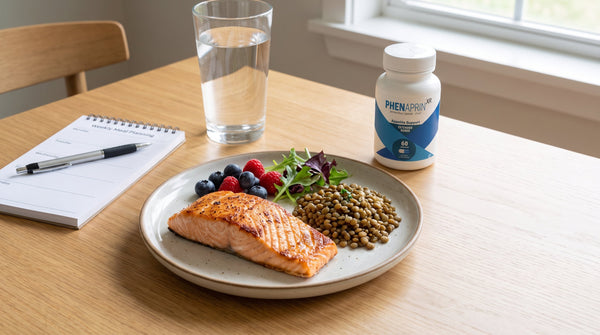
Eat enough before evening. The single biggest lever. Real meals with protein and fiber at breakfast and lunch mean the evening pull is preference, not physiology. A day of "being good" on coffee and a salad reliably produces a loud night.
Plan the evening snack. Deciding at 9 PM, standing in the pantry glow, is the worst decision format there is. Decide at 5 PM instead: what the snack is, how much, and when. A planned snack satisfies; grazing broadcasts.
Close the kitchen with a ritual. After the planned snack, run a small ending: lights off in the kitchen, dishwasher on, teeth brushed, herbal tea poured. Rituals give the evening a "done eating" boundary that willpower alone never draws.
Manage the cues. Trigger foods out of sight, food content off the evening scroll, and something for your hands (tea, a book, an actual hobby) during the couch hours.
Protect the sleep itself. A consistent bedtime is a food noise intervention. Given what short sleep does to hunger hormones, going to bed on time tonight is the quietest tomorrow gets.
Can a supplement help with evening appetite?
Here is the honest answer: no supplement mutes your thoughts, and evening is exactly when you should not add caffeine. What a well-designed caffeine-free formula can do is support your body's satiety signaling through the back half of the day.
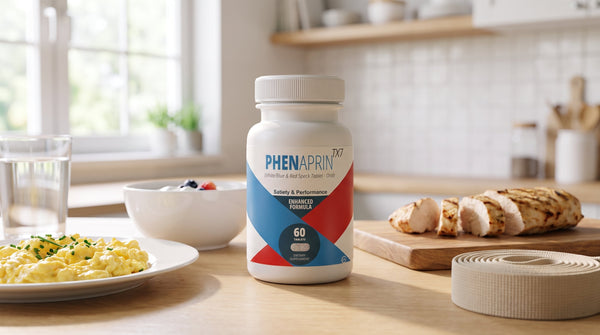
PhenAprin XR is our caffeine-free formula built around glucomannan, a konjac-root fiber that absorbs water and expands in the stomach, supporting a physical feeling of fullness (you can read the full mechanism in our glucomannan guide). Because it is caffeine-free, it fits the part of the day when caffeine does not.
Timing matters, and the safety rules are not optional: take each capsule with at least 8 oz of water, 30 to 60 minutes before your evening meal, not at bedtime. Glucomannan must never be taken right before lying down, and it is not for anyone with difficulty swallowing. Used with dinner, it supports fullness through the evening hours when food noise peaks. Used as a midnight pantry replacement, it is being used wrong, and we would rather tell you that plainly.
For the bigger picture of how appetite signaling works, see Appetite Control, Explained and the complete formulas on the ingredients page.
These statements have not been evaluated by the Food and Drug Administration. This product is not intended to diagnose, treat, cure, or prevent any disease. Individual results vary.
Frequently asked questions
Why do I only get food cravings at night?
Partly biology, partly setup. Research shows the internal circadian clock independently pushes hunger and appetite upward in the evening (PMID 23456944), and most people arrive at night with depleted willpower, an under-fueled day, and a couch full of food cues. Eating enough earlier and planning the evening snack turns the volume down.
Does eating at night cause weight gain?
Total intake over time matters most, but evenings are when unplanned extra calories usually happen, because appetite is circadian-peaked and restraint is lowest. A planned evening snack you enjoy beats unplanned grazing you barely notice.
What is a good evening routine to stop snacking?
Decide the evening snack by late afternoon, eat it deliberately, then close the kitchen with a ritual: lights off, teeth brushed, tea poured. Keep trigger foods out of sight and give your hands something to do. Consistency beats intensity; the routine works because it repeats.
Can I take PhenAprin XR in the evening?
Yes, with your evening meal: take each capsule with at least 8 oz of water, 30 to 60 minutes before dinner. Never take glucomannan right before lying down or at bedtime, and do not take it if you have difficulty swallowing. XR is caffeine-free, so it will not add caffeine to your evening.
Does poor sleep really make me hungrier?
Yes, measurably. In a controlled study, two nights of short sleep lowered leptin by 18 percent, raised ghrelin by 28 percent, and raised reported hunger by 24 percent, with stronger cravings for calorie-dense foods (PMID 15583226). Protecting sleep is one of the most direct ways to quiet the next day's food noise.
References
- PMID 23456944. Scheer FA, Morris CJ, Shea SA. The internal circadian clock increases hunger and appetite in the evening independent of food intake and other behaviors. Obesity, 2013. [link]
- PMID 15583226. Spiegel K, et al. Sleep curtailment in healthy young men is associated with decreased leptin levels, elevated ghrelin levels, and increased hunger and appetite. Annals of Internal Medicine, 2004. [link]
- PMID 23922121. Greer SM, Goldstein AN, Walker MP. The impact of sleep deprivation on food desire in the human brain. Nature Communications, 2013. [link]
- PMID 40628707. Dhurandhar EJ, et al. Food noise: definition, measurement, and future research directions. Nutrition and Diabetes, 2025. [link]

From PhenAprin
PhenAprinXR Diet Pills
Transparent label, honest dosing, third-party tested.
See the formulaFind your fit
Find the PhenAprin formula that fits your routine
Three formulas, one transparent label. Compare them and choose the one built for your day.