What Is Food Noise? And How to Quiet It
What food noise is, why it happens, and practical ways to quiet it, with or without a GLP-1 program.
By PhenAprin Research Team
Reviewed against published researchPublished · Last updated September 4, 2026
On this page
Quick answer
Key takeaways
- Food noise is the popular term for persistent, unwanted thoughts about food. Researchers formally defined and started measuring it in 2023 to 2025.
- It is not a willpower problem. Food cue reactivity, reward wiring, and hunger hormones drive it.
- The phrase went mainstream through the GLP-1 medication conversation, where "the food noise went quiet" became shorthand for relief.
- Everyday levers turn the volume down: regular meal rhythm, protein and fiber at meals, water, sleep, and managing the food cues around you.
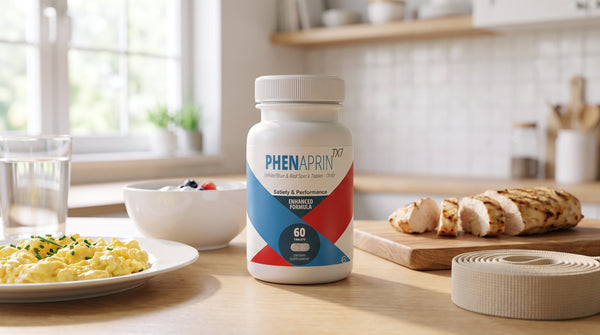
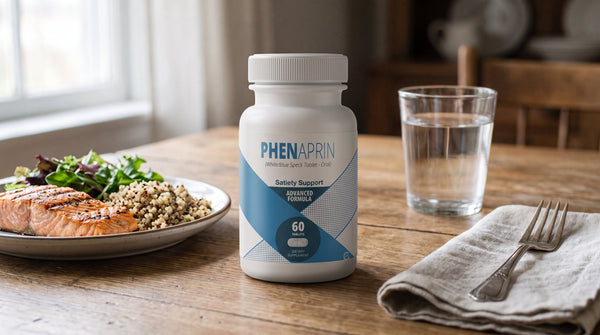
- PhenAprin Original is formulated around satiety signaling support, and PhenAprin XR takes a caffeine-free, fiber-first approach. Supplements support these pathways; they are not medications.
What is food noise?
Food noise is the mental chatter about food that keeps playing when you wish it would stop. Thinking about lunch an hour after breakfast. Negotiating with the pantry while you work. Replaying what you ate and planning what you will eat next, on a loop.
The term started as everyday language, but research has caught up to it. A 2025 paper in Nutrition and Diabetes defines food noise as "persistent thoughts about food that are perceived by the individual as being unwanted and/or dysphoric" (PMID 40628707). An earlier 2023 paper proposed the concept as a form of food cue reactivity: your brain responding, over and over, to internal and external food cues (PMID 38004203). There is now even a validated Food Noise Questionnaire that researchers use to measure it.
One important thing to be clear about: food noise is not a medical diagnosis. It is a shared name for a real, common experience.
What does food noise feel like?
People describe it in remarkably similar ways:
- You think about food between meals even when you are not physically hungry.
- Deciding what to eat feels heavier than it should, and the decision follows you around.
- A snack you saw once keeps re-announcing itself all afternoon.
- Eating quiets the chatter for a while, and then it starts again sooner than you expected.
- At the loud end, the thoughts feel intrusive: unwanted, distracting, and tiring.
That last part matters. Ordinary hunger is a signal that shows up, gets answered, and goes away. Food noise is a signal that keeps broadcasting. The 2025 research describes it as closer to rumination than to appetite, which is why "just ignore it" advice rarely works.
What causes food noise?
There is no single cause, but the research points to a few overlapping drivers.
Food cue reactivity. Your brain is built to notice food, and the modern environment is saturated with cues: ads, delivery apps, office snacks, an endless scroll of food content. Each cue can trigger a small anticipatory response, and highly palatable, energy-dense foods produce the strongest ones (PMID 38004203).
Reward wiring. Food thoughts run partly on dopamine pathways, the same circuitry involved in wanting and anticipation. When reward wiring is highly responsive to food cues, the chatter gets louder.
Hunger and satiety hormones. Between your gut and your brain runs a constant hormonal conversation: ghrelin signaling hunger, and hormones like cholecystokinin (CCK), PYY, and GLP-1 signaling fullness (DOI 10.1038/ijo.2017.164). When the fullness side of that conversation is quiet, food thoughts fill the silence.
Restriction rebound. Aggressive dieting can amplify food preoccupation. The tighter the rules, the louder the forbidden foods tend to become.
Sleep and stress. Short sleep and high stress both push hunger signaling in the wrong direction, which turns the volume up further.
Why is everyone talking about food noise right now?
The phrase exploded because of GLP-1 receptor agonist medications, the prescription weight loss class. Many patients describe the same surprising effect: within days, the constant food chatter goes quiet. That experience gave millions of people a name for something they had felt for years, and researchers followed with formal definitions and measurement tools (PMID 40628707).
The research on those medications suggests the quieting effect works partly through appetite and satiety pathways in the brain. That is the medication conversation, and it belongs between a patient and their doctor. PhenAprin products are dietary supplements, not medications, and not a substitute for any prescription treatment. But the underlying lesson applies to everyone: food noise has biology behind it, and supporting your body's own satiety signaling is a rational place to start.
How do you quiet food noise naturally?
You cannot mute your brain, but you can change what it has to work with. These are the levers with the most sense behind them:
Eat on a rhythm. Long, unplanned gaps between meals hand the microphone to hunger hormones. Regular meals and planned snacks keep the conversation calmer.
Front-load protein. Protein is the most satiating macronutrient per calorie. Meals built around it tend to hold you longer, which means fewer between-meal broadcasts.
Use fiber and water. Soluble fiber absorbs water and expands in the stomach, supporting a physical feeling of fullness that your vagus nerve reports up to the brain. It is one of the most concrete, mechanical ways to support satiety between meals. (This is exactly how glucomannan works; more on that below.)
Protect sleep. Short nights reliably make food thoughts louder the next day.
Manage your cues. Food noise feeds on visibility. Keeping trigger foods out of sight, unfollowing the food content that sets you off, and having a default answer for "what's for lunch" all remove repeat triggers.
Lower the stakes. Rigid, all-or-nothing rules tend to backfire into louder preoccupation. Structured flexibility usually beats prohibition.
Can supplements help with food noise?
Here is the honest, structure and function answer: supplements do not switch food noise off, and anyone who promises that is overselling. What a well-designed formula can do is support the body's own satiety signaling, the same pathways described above.
That is the thinking behind PhenAprin Original. Its lead ingredient, L-phenylalanine, is an essential amino acid that research connects to the release of CCK, one of the gut's primary fullness hormones (PMID 8201963; DOI 10.1038/ijo.2017.164). It also serves as a precursor in the dopamine pathway involved in appetite regulation. The honest dose context: the CCK studies used multi-gram amounts, while PhenAprin Original provides a 230 mg supportive dose that works alongside the rest of the formula, not a reproduction of study levels. One important caution: people with phenylketonuria (PKU) must avoid phenylalanine entirely, and anyone taking prescription medication should talk with their healthcare provider first.
If you prefer a caffeine-free route, or you want fiber doing the heavy lifting, PhenAprin XR is built around glucomannan, a konjac-root fiber that expands with water to support that mechanical feeling of fullness between meals. Take each capsule with at least 8 oz of water, and do not take it before bed or if you have difficulty swallowing. You can read the full mechanism in our glucomannan guide.
Both approaches aim at the same target from different angles: giving the fullness side of your gut-brain conversation more to say, so the food noise side has less room. You can compare every ingredient and dose on the ingredients page, and go deeper on appetite signaling in Appetite Control, Explained.
These statements have not been evaluated by the Food and Drug Administration. This product is not intended to diagnose, treat, cure, or prevent any disease. Individual results vary.
Frequently asked questions
What is food noise in simple terms?
Food noise is constant mental chatter about food: thoughts about eating that keep showing up even when you are not physically hungry. Researchers define it as persistent, unwanted thoughts about food. It is a common experience with real biology behind it, not a character flaw.
Is food noise a medical condition?
No. Food noise is not a diagnosis. It is a widely shared name for persistent, intrusive food thoughts, and researchers formalized a definition and a measurement questionnaire for it in 2023 to 2025. If food thoughts significantly disrupt your life, that is worth discussing with a healthcare provider.
Why do people on GLP-1 medications say their food noise disappeared?
Research on GLP-1 receptor agonist medications suggests they act on appetite and satiety pathways in the brain, and many patients report food chatter quieting as a result (PMID 40628707). That is a medication effect discussed with a doctor. PhenAprin products are supplements, not medications, and not a substitute for any prescription treatment.
What foods help quiet food noise?
Meals built on protein and fiber hold you the longest. Protein is the most satiating macronutrient, and soluble fiber expands with water to support a physical feeling of fullness. Regular meal timing, water, and consistent sleep support the same goal: fewer loud gaps for food thoughts to fill.
Do supplements help with food noise?
Supplements support the body's own satiety signaling rather than switching thoughts off. PhenAprin Original provides L-phenylalanine, which research connects to the fullness hormone CCK at multi-gram study doses (its 230 mg is a supportive dose within the formula). PhenAprin XR uses glucomannan fiber, taken with at least 8 oz of water per capsule, to support mechanical fullness. Individual results vary.
References
- PMID 38004203. Hayashi D, et al. What Is Food Noise? A Conceptual Model of Food Cue Reactivity. Nutrients, 2023. [link]
- PMID 40628707. Dhurandhar EJ, et al. Food noise: definition, measurement, and future research directions. Nutrition and Diabetes, 2025. [link]
- PMID 8201963. Ballinger AB, Clark ML. L-phenylalanine releases cholecystokinin (CCK) and is associated with reduced food intake in humans. 1994. [link]
- DOI 10.1038/ijo.2017.164. Alamshah A, et al. L-phenylalanine modulates gut hormone release via the calcium-sensing receptor (CCK, PYY, GLP-1 family). Int J Obes, 2017. [link]

From PhenAprin
PhenAprin Diet Pills
Transparent label, honest dosing, third-party tested.
See the formulaFind your fit
Find the PhenAprin formula that fits your routine
Three formulas, one transparent label. Compare them and choose the one built for your day.